
Is Your Swimming Pool Losing Water?
If you've noticed your pool water level dropping faster than usual, you're not alone. Many pool owners in Lanzarote face this problem, especially during the hot summer months. But how do you know if it's evaporation or an actual leak?
In this comprehensive guide, we'll show you how to check for pool leaks using simple DIY methods, and explain when it's time to call professional leak detection services.
Understanding Pool Water Loss
Before panicking about a potential leak, it's important to understand that some water loss is normal:
- Evaporation: In Lanzarote's warm climate, pools can lose 3-7mm of water per day through evaporation
- Splash-out: Active swimming and play can cause significant water loss
- Backwash: Filter cleaning removes water from your pool
- Wind: Lanzarote's trade winds accelerate evaporation
If you're losing more than 5cm of water per week, you likely have a leak that needs attention.
That 5cm figure is only a rule of thumb, and Lanzarote's weather makes rules of thumb unreliable: a windy week strips far more water off a pool than a calm one. For the real number, use our free pool evaporation calculator. It works out how much water your pool should have lost in any week you choose, from the real hour-by-hour weather at your own town, and tells you whether your actual drop is normal, borderline, or beyond what the weather can explain.
What Most Pool Owners Don't Know About Evaporation
- It doesn't stop at night. A pool holds so much heat that it barely cools overnight, so warm water sits under darker, drier air all night, still evaporating. The dark hours often carry more than a third of a day's loss here.
- The wind matters more than the sun. The sun's main job is keeping the water warm; it is the wind that strips the water off. That's why the same pool loses different amounts in Playa Blanca and Arrecife in the same week.
- A full cover stops about 95% of evaporation while it's on, measured in controlled twelve-pool testing. When it goes on is what decides the real saving: covering nights only saves whatever share of the loss those actual night hours carried.
The Bucket Test: Your First Step
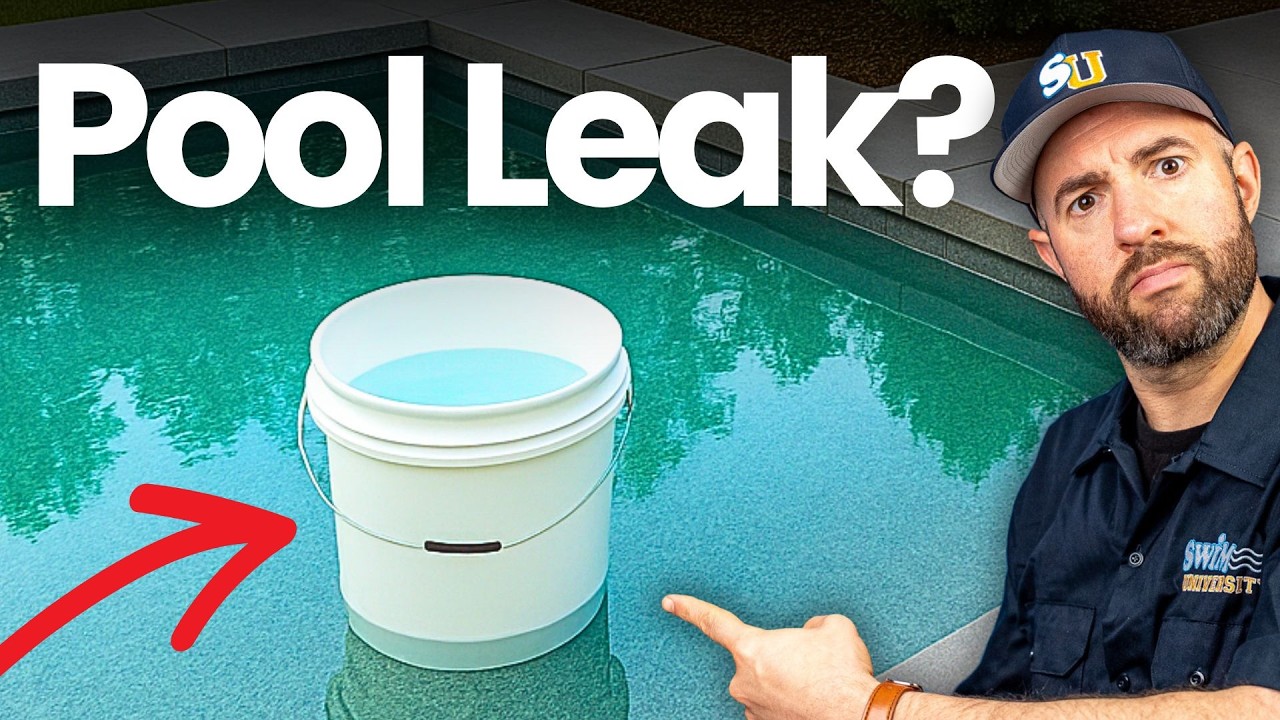
The bucket test is the most reliable DIY method to determine if your pool is leaking or just evaporating water. Watch this excellent video from Swim University that demonstrates exactly how to perform the test:
Step-by-Step Bucket Test
- Bring your pool water to normal level before starting the test
- Fill a 5-gallon bucket with pool water to about one inch from the top
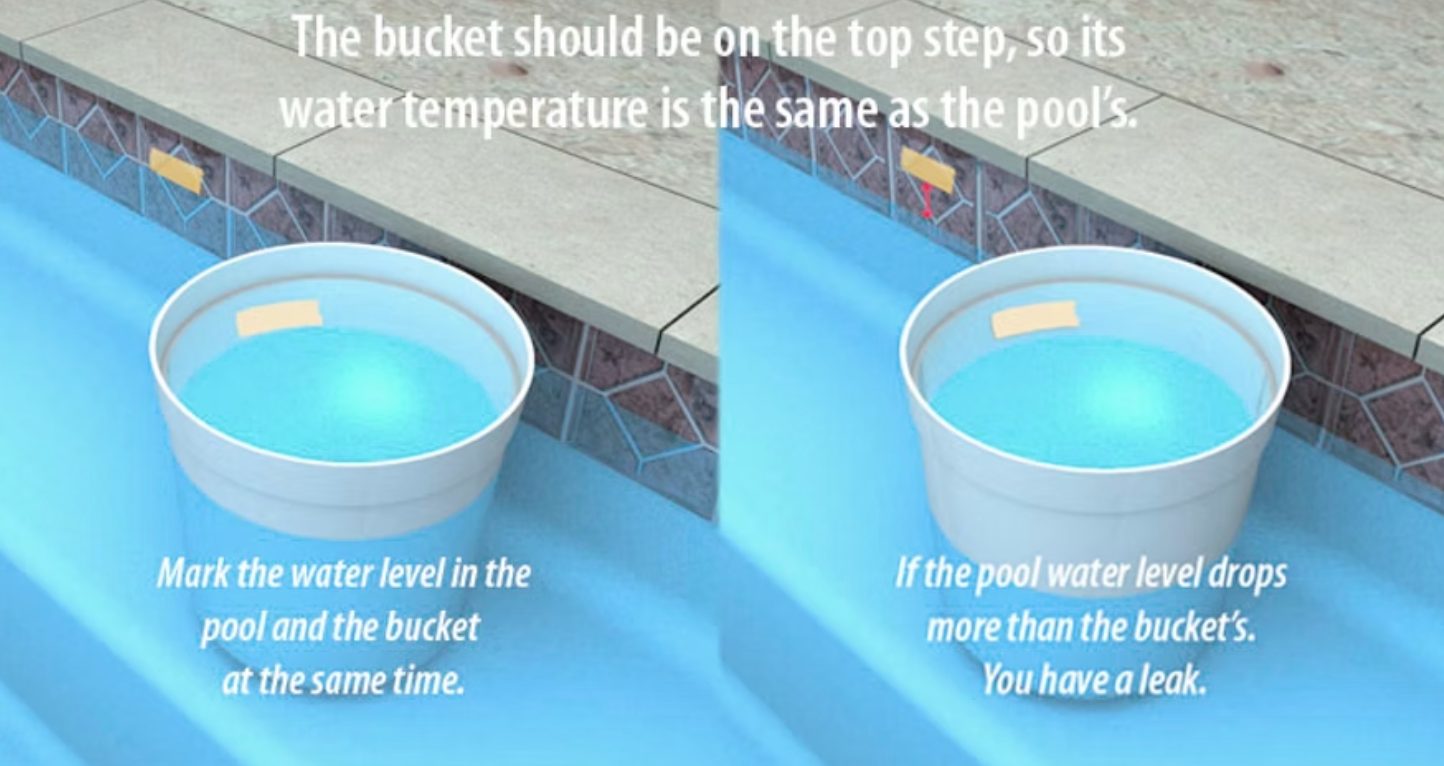
- Place the bucket on the first or second step so the water temperature matches
- Mark the water level inside the bucket with tape or marker
- Mark the pool water level on the outside of the bucket
- Wait 24 hours without using the pool or running any equipment
- Compare the levels - if the pool level dropped more than the bucket level, you have a leak
Interpreting Your Results
- Equal drop: Normal evaporation - no leak detected
- Pool dropped more: You have a leak - time for professional leak detection
- Pool dropped significantly more: Serious leak requiring immediate attention
The bucket test takes 24 hours. For an instant steer first, the evaporation calculator compares the drop you've measured against the weather-modelled loss for your exact town and dates, no bucket required.
The Dye Test: Locating Visible Leaks
If you suspect a leak near fittings, lights, or visible cracks, the dye test can help confirm:
- Turn off all pool equipment
- Let the water become completely still
- Use food colouring or leak detection dye
- Squirt dye near suspected areas
- Watch if the dye is pulled into any cracks or gaps
Pro tip: This test works best on calm days with no wind.
Common Swimming Pool Leak Locations
Based on our experience detecting pool leaks across Lanzarote, here are the most common leak locations:
Structural Leaks
- Cracks in pool shell
- Expansion joint failures
- Tile and grout deterioration
Plumbing Leaks
- Underground pipe connections
- Skimmer connections
- Return line fittings
- Main drain gaskets
Equipment Leaks
- Pump seals
- Filter housing
- Heater connections
- Chlorinator fittings
Signs You Need Professional Leak Detection
While DIY tests are helpful, some situations require professional equipment:
- Consistent water loss despite passing the bucket test
- Unexplained high water bills
- Wet spots around pool equipment or in your garden
- Cracks or settling in pool deck
- Air bubbles in the return lines
- Algae growth in specific areas (can indicate fresh water intrusion)
Professional Pool Leak Detection in Lanzarote
At Canary Detect, we use advanced technology to find swimming pool leaks without damaging your pool:
- Pressure testing of all plumbing lines
- Electronic leak detection for pinpoint accuracy
- Dye testing with professional-grade equipment
- Underwater camera inspection of pipes and drains
Our No Find, No Fee guarantee means you only pay when we locate your leak.
Preventing Future Pool Leaks
Once your leak is repaired, prevent future problems with these tips:
- Regular inspections of visible fittings and equipment
- Proper water chemistry to prevent deterioration
- Prompt repair of small cracks or chips
- Winter maintenance to prevent freeze damage (rare but possible in Lanzarote's highlands)
Advanced Pool Leak Tests: What Professionals Use
DIY tests like the bucket test are a good starting point, but they can only tell you whether a leak exists, not where it is. Professional pool leak detection uses specialised equipment to locate the exact source.
Pressure Testing Pool Plumbing Lines
Pressure testing involves isolating individual sections of the pool's pipework and pressurising each section to a test pressure. A section that cannot hold pressure has a fault, and this process eliminates sections of pipework systematically until the faulty line is identified. This is the most reliable way to confirm whether a leak is in the plumbing rather than the shell.
Dye Testing Around Fittings and Cracks
Professional dye testing uses a slow-release dye syringe that deposits a precise stream of dye near suspected fault points: skimmer surrounds, return fittings, main drain covers, light niches, and visible cracks in the shell. If the dye is drawn towards a fault, it flows visibly towards the leak point. This works best on calm water with the pump off.
Acoustic Detection for Underground Pool Pipes
Pool plumbing runs underground, and a pressurised underground pipe leak creates a sound that acoustic equipment can detect from the surface. By placing acoustic sensors along the pipe route, our technicians can identify the section of pipe that is leaking and narrow it down to a precise location before any excavation begins.
Thermal Imaging for Pool Wall and Floor Leaks
Where a pool shell crack is leaking, the water seeping through the crack creates a temperature anomaly on the outer surface that is visible to a thermal camera. This is particularly useful on fibreglass and rendered shells where cracks may be too fine to see visually but are actively leaking.
Common Pool Leak Locations in Lanzarote
Skimmer to Shell Joint
The joint where the plastic skimmer body meets the concrete or fibreglass shell is one of the most common leak points on any pool. Thermal movement over years loosens the bond, and water escapes between the skimmer throat and the shell. This leak is often visible as a slow waterline drop that stops once the water level falls below the skimmer mouth.
Return Fittings and Eyeballs
Return jet fittings pass through the pool wall and are sealed with a rubber gasket. Over time, these gaskets deteriorate and the fittings can work loose, allowing water to escape around the fitting rather than through it into the pool. Return fitting leaks are among the easiest to detect by dye testing.
Main Drain and Sump
The main drain at the deepest point of the pool is surrounded by a seal that can deteriorate. Dye testing directly over the main drain cover reveals whether water is being drawn out through a compromised seal.
Underground Supply and Return Pipes
A significant proportion of serious pool leaks occur not in the shell but in the underground pipework running between the pool and the pump room. These pipes are typically 25-50mm diameter PVC, and they can crack from ground movement, tree root intrusion, or UV degradation in exposed sections. Pressure testing isolates these lines and tracer gas or acoustic detection locates the fault.
Frequently Asked Questions: Pool Leak Testing Lanzarote
How long does a pool leak test take?
A thorough professional pool leak test typically takes two to four hours. This includes pressure testing all plumbing lines, dye testing visible fittings and shell areas, and acoustic detection of any suspect underground pipe sections.
My pool only seems to lose water when the pump is running. What does that mean?
If the pool level drops when the pump is running but holds steady when it is switched off, the leak is in the pressurised return side of the plumbing, the section between the pump and the return jets in the pool wall. This narrows the fault to a specific section of pipework.
My pool loses water overnight when the pump is off. Is that different?
Yes. If the pool loses water only when the pump is off, the leak is in the suction side pipework between the pool and the pump. If it loses water both when the pump is on and off, the leak is in the shell or a fitting below the waterline.
How much water loss per week is actually a leak?
Normal evaporation in Lanzarote accounts for around 2 to 4 centimetres per week during summer. If you are losing more than 5 centimetres per week in calm weather with no wind, and the bucket test confirms the pool is losing more than the bucket, you have a pool leak that needs professional attention. For a sharper answer than the rule of thumb, our free pool evaporation calculator models your town's actual weather hour by hour and flags whether your drop is beyond what evaporation can explain.
Can pool leaks be repaired without draining the pool?
Some can, and some cannot. Fitting leaks, skimmer joint repairs using underwater epoxy, and minor shell crack injections can often be carried out without draining. Structural crack repairs, resurfacing work, and underground pipe repairs require draining. We advise on the least disruptive approach for each specific fault.
Get Professional Help Today
If you've tried the bucket test and suspect a leak, don't wait. Water leaks waste money and can cause structural damage to your pool and surrounding areas.
Contact Canary Detect for professional swimming pool leak detection in Lanzarote. We serve Playa Blanca, Puerto del Carmen, Costa Teguise, Arrecife, and all areas of the island.
Need Professional Help?
Canary Detect offers professional leak detection services across Lanzarote with our No Find, No Fee guarantee.
Get a Free QuoteNeed The Leaky Finders?
Don't let hidden leaks damage your property. Contact Canary Detect - The Leaky Finders - for expert leak detection across Lanzarote with our No Find, No Fee guarantee.
Get a Free Quote