
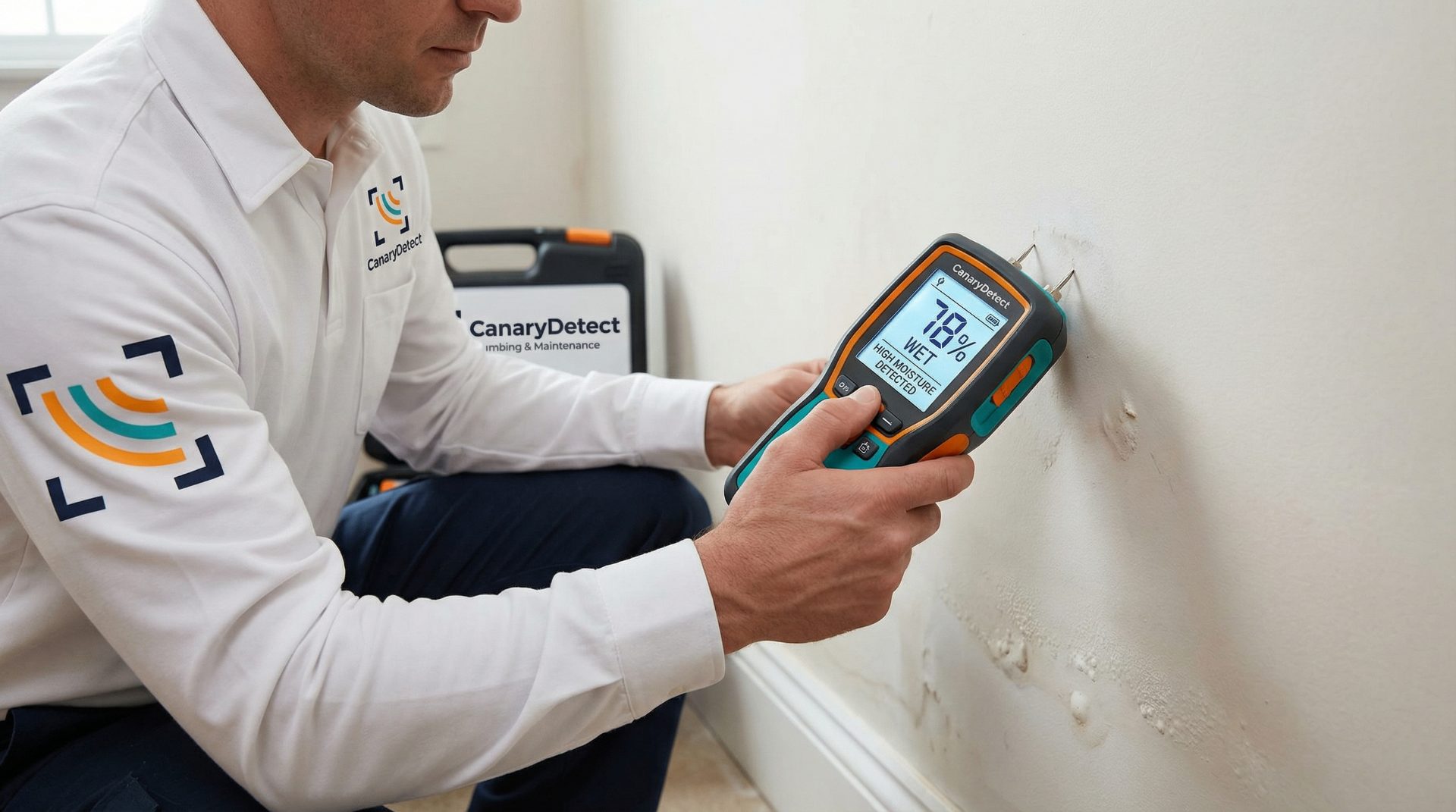
Hidden Leaks in Lanzarote Villas
Water leaks in Lanzarote properties are often invisible for months before causing obvious damage. By the time you see damp patches or mould, significant damage may have already occurred behind walls and under floors.
At Canary Detect, we find that 95% of leaks are hidden, no visible drips, no obvious signs. This guide helps you spot the early warning signs before expensive damage occurs.
The 10 Warning Signs of a Hidden Water Leak
1. Water Meter Spinning When Taps Are Off
The clearest sign of a leak is a spinning meter with all water outlets closed:
- Turn off all taps, showers, and appliances
- Check your water meter
- Look at the small red dial or digital display
- If it's moving, water is flowing somewhere
Important for Lanzarote: If you have an aljibe (water tank) system, meter behaviour is more complex. Learn about aljibe systems and leak detection →
2. Unexpectedly High Water Bills
Compare your bills over time:
- Sudden spikes without usage changes
- Gradual increase over several months
- Bills much higher than neighbours with similar properties
In Lanzarote, a small hidden leak can waste €200-500 per year in water costs alone.
3. Damp or Discoloured Patches on Walls
Look for:
- Damp patches that appear without rain
- Tide marks or waterlines on walls
- Paint bubbling or peeling
- Wallpaper lifting from walls
- Discolouration (yellow, brown stains)
These signs indicate water travelling behind the wall surface.
4. Musty or Mouldy Smells
Hidden moisture creates distinctive odours:
- Musty, earthy smell (like a damp cellar)
- Mouldy odour in specific rooms
- Smells that get stronger after closing the house
If the smell appears after returning from a trip, moisture has been accumulating.
5. Visible Mould Growth
Mould indicates sustained moisture:
- Black spots in corners or behind furniture
- Green or grey patches on walls
- Mould on textiles (curtains, upholstery)
- Mould reappearing after cleaning
Mould only grows where humidity exceeds 60-70% for extended periods.
6. Warm or Cold Spots on Floors
Temperature anomalies reveal hidden pipes:
- Warm patches indicate hot water pipe leaks
- Cold patches may indicate cold water escaping
- Tiles that feel different temperatures
Walk barefoot on tile floors, you'll notice temperature differences more easily.
7. Sound of Running Water
Listen carefully when the house is quiet:
- Hissing sounds in walls
- Dripping noises behind fixtures
- Running water sounds with taps off
These sounds may be intermittent if connected to the aljibe system.
8. Decreased Water Pressure
A leak reduces system pressure:
- Weak shower flow compared to before
- Slow-filling toilets
- Taps taking longer to run hot
- Pump running more frequently (if you have one)
If pressure dropped suddenly, the leak may be significant.
9. Cracks in Walls or Foundations
Water damage causes structural movement:
- Diagonal cracks from corners of doors/windows
- Cracks following grout lines in tiles
- Foundation cracks near plumbing routes
- Doors/windows sticking that didn't before
Lanzarote's volcanic soil amplifies this, wet soil swells and shifts.
10. Pooling Water Outside
External signs of underground leaks:
- Wet patches on driveway or garden
- Green, lush grass in dry areas
- Erosion or sinkholes near building
- Rising damp on external walls
These indicate water escaping below ground and surfacing.
Where Leaks Hide in Lanzarote Villas
Bathrooms
Most common leak locations:
- Behind shower trays (failed waterproofing)
- Toilet connections (worn seals)
- Basin pipework (hidden in cabinets)
- Underfloor heating connections (if installed)
Kitchens
Common culprits:
- Dishwasher connections (hidden leaks for months)
- Under-sink pipework (slow drips)
- Fridge water lines (ice makers)
- Waste pipes (cause smell rather than wet patches)
Flat Roofs
Lanzarote's flat roof architecture is vulnerable:
- Waterproofing failure around edges
- Cracks in roof screed from thermal movement
- Blocked drainage causing ponding
- Terrace tile joints allowing water penetration
Underground Pipes
Garden and supply pipes:
- Mains supply between meter and house
- Irrigation system connections
- Pool plumbing (common in Lanzarote)
- Hot water circulating pipes
What to Do If You Suspect a Leak
Step 1: Monitor Your Meter
Record meter readings morning and evening for a week. Even small changes indicate a leak.
Step 2: Visual Inspection
Check accessible areas:
- Under all sinks
- Around toilet bases
- Behind washing machines
- In utility cupboards
Step 3: Listen Carefully
At night when the house is quiet, listen at walls, especially near bathrooms and kitchens.
Step 4: Get Professional Help
If you find evidence of a leak but can't locate it, you need specialist equipment:
- Acoustic detection to hear leaks through walls
- Thermal imaging to see temperature anomalies
- Tracer gas to find pinhole leaks
- Moisture mapping to trace water paths
Why DIY Leak Detection Often Fails
Many homeowners spend weeks:
- Opening up walls in wrong locations
- Paying plumbers to "investigate"
- Making the damage worse
95% of leaks cannot be found without specialist equipment. Professional detection costs less than exploratory damage.
Why Lanzarote Villa Leaks Go Undetected for So Long
Many homeowners in Lanzarote are surprised to learn that their hidden leak has been running for months or even years. Several factors specific to the island explain why.
Properties Left Unoccupied for Extended Periods
A large proportion of Lanzarote properties are holiday homes or investment properties. Weeks or months can pass between visits, and a leak that begins during an empty period may not be discovered until significant damage has already occurred beneath floors, within walls, or under the garden.
Flat Roof Architecture and Drainage
Lanzarote's characteristic flat-roof architecture concentrates rainwater and traps moisture in a way that pitched-roof properties do not. When flat roof waterproofing fails, water works slowly into the roof structure and eventually appears inside the property at a point well away from the original entry, making the source difficult to trace without specialist equipment.
Desalinated Water Supply and Pipe Damage
The desalinated water supply used across Lanzarote has a different mineral profile to mainland European water. Over years, this accelerates internal corrosion in copper and galvanised iron pipes, causing small pinholes to form that lose very little water initially but worsen gradually. These slow leaks do not trigger obvious warning signs for months.
The Hidden Cost of Ignoring Leak Signs in Lanzarote
In Lanzarote, water is one of the most expensive utilities on the island. Every cubic metre is desalinated before it reaches your property, which means even a small leak has a direct and measurable financial cost beyond the water bill itself. A pipe leaking at a modest rate of one litre per hour wastes over 8,000 litres per month. At Lanzarote water rates, this adds up quickly.
Beyond the water cost, structural water damage in Lanzarote properties tends to progress faster than on the mainland. The volcanic soil composition means water spreads laterally beneath floor slabs rather than draining away, saturating the substrate and compromising tile adhesion across a wide area around the actual leak point.
What Happens During a Professional Leak Detection Survey
When you call Canary Detect about a suspected leak in your villa or apartment, we carry out a structured survey designed to confirm the presence of a leak and locate it precisely without unnecessary damage.
We start with a water meter test to confirm water is actively leaving the system. We then carry out pressure testing to measure the rate of loss and identify which section of the plumbing is affected. Depending on the location and type of pipe, we use acoustic sensors, tracer gas, thermal imaging, or internal CCTV to pinpoint the fault.
The result is a written report that documents the leak location with photographs, the probable cause, and recommendations for repair. This report is accepted by all major insurers operating in the Canary Islands for insurance claims.
Frequently Asked Questions: Signs of Water Leak in Villa Lanzarote
I have damp patches on my wall but no visible drips. Do I have a leak?
Yes, this is a common presentation. Damp patches on walls without visible dripping water typically indicate a slow pipe leak behind the surface. The water travels through the wall structure before appearing at the surface. A thermal imaging camera can locate the source without opening up the wall.
My water bill has gone up but I cannot see anything wrong. What should I do?
Check your water meter with all taps and appliances off. If the meter is still moving, you have an active leak. If the meter is still, the increase may be due to a slow intermittent leak or a billing error. Even if the meter appears static, an increase in bills over several months warrants a professional leak survey.
How do I know if the damp on my flat roof terrace is a leak or just condensation?
A damp patch that appears after rain and dries out within a day or two is likely surface water from inadequate drainage. A damp patch that persists regardless of weather and feels wet to the touch suggests a waterproofing failure. If you are unsure, a moisture survey using a damp meter can distinguish between condensation and an active water ingress.
Is it always a plumbing leak, or could the damp come from somewhere else?
Not all damp patches are caused by plumbing leaks. Flat roof waterproofing failure, rising damp from soil contact, condensation inside insulated walls, and poorly sealed window and door frames are all common causes of damp in Lanzarote properties. Our survey establishes whether the moisture source is from the plumbing system or an external ingress source.
Can I get a report for my insurance company?
Yes. Every Canary Detect survey produces a full written report including the leak location, photographs, cause assessment, and repair recommendations. This report is accepted by all major insurance companies operating in the Canary Islands.
Free Leak Confirmation
Not sure if you have a leak? Our Free Leak Confirmation Test gives you a definitive answer before committing to a full survey.
Get your free leak confirmation →
Contact Canary Detect for professional leak detection across Lanzarote. We serve Arrecife, Puerto del Carmen, Playa Blanca, Costa Teguise, Yaiza, and all areas of the island.
Need Professional Help?
Canary Detect offers professional leak detection services across Lanzarote with our No Find, No Fee guarantee.
Get a Free QuoteNeed The Leaky Finders?
Don't let hidden leaks damage your property. Contact Canary Detect - The Leaky Finders - for expert leak detection across Lanzarote with our No Find, No Fee guarantee.
Get a Free Quote